Understanding How Jacksonville’s Hard Water Impacts Your Oral Health
Living in beautiful Northeast Florida brings plenty of sunshine and coastal breezes, but it also comes with a unique environmental characteristic that impacts our daily lives: hard water. Whether you are running a load of dishes or taking a shower, you have likely noticed the chalky white residue left behind on your fixtures. That film is the visual evidence of heavy mineral content.
Many residents ask us how the local water supply affects their bodies, but few realize that what comes out of the tap can actively influence their oral health. As a dedicated dental team, we want to help you understand exactly what is in your water, how it interacts with your teeth, and the steps you can take to maintain a bright and healthy smile.
What Exactly Is Hard Water?
Before diving into the dental specifics, it is helpful to look at what makes water hard in the first place. When rain falls, it is naturally soft and free of minerals. However, as it filters through the ground and into our local aquifers, it dissolves minerals from the surrounding rock.
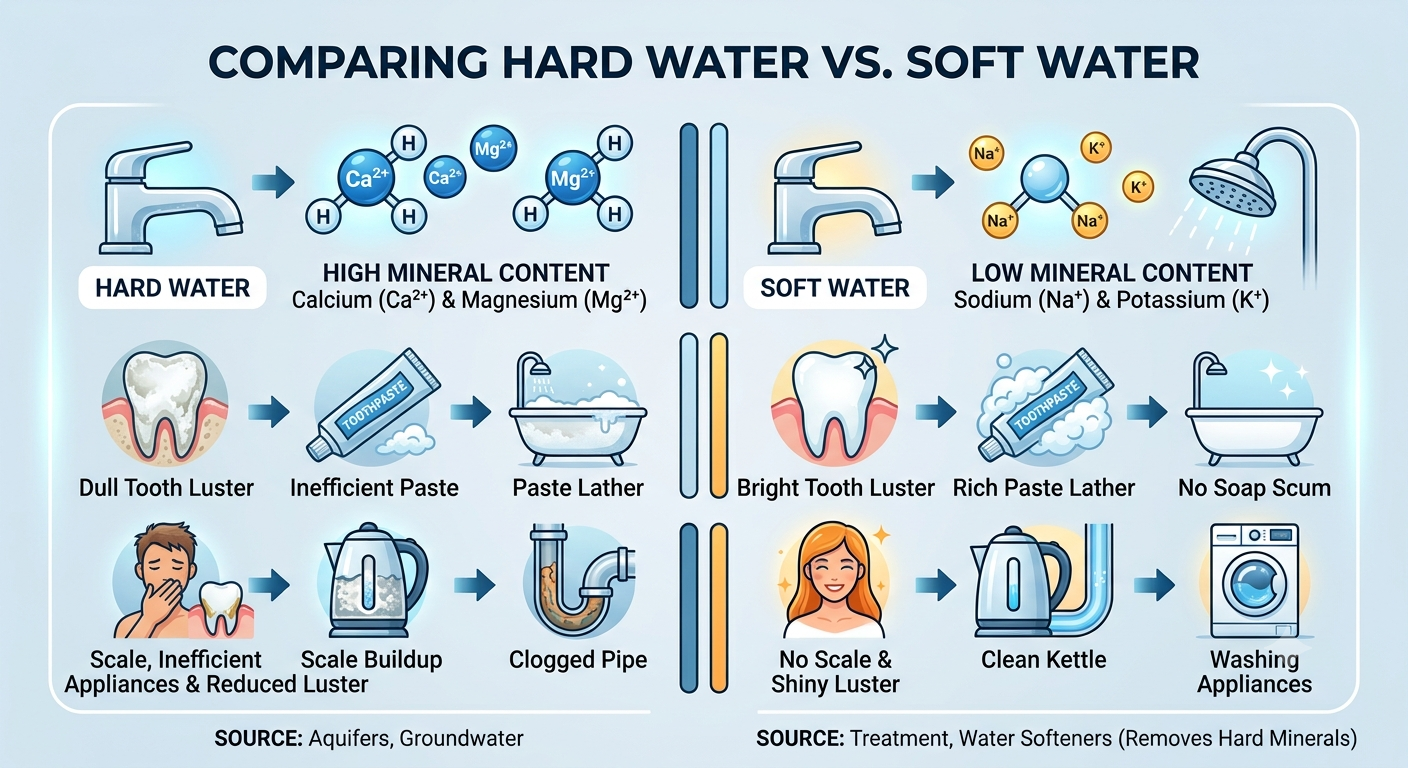
In our region, the water travels through deep limestone layers, which are incredibly rich in calcium and magnesium. By the time that water reaches your household plumbing, it is heavily loaded with these dissolved minerals. While drinking these minerals is generally considered safe and even beneficial for your daily nutritional intake, the high concentration creates unique challenges for cleaning, plumbing, and yes, your dental hygiene routine.
The Unexpected Link Between Mineral Rich Water and Plaque Buoyancy
Most people associate hard water with stubborn soap scum on glass shower doors or a lack of fluffy bubbles when washing their hands. The very same chemical reaction that makes it hard to lather your shampoo also takes place inside your mouth when you brush your teeth.
When mineral rich water mixes with standard toothpaste, it reduces the overall effectiveness of the foaming agents. Toothpaste relies on a mild foaming action to help lift food particles, disrupt bacteria, and distribute protective ingredients across all surfaces of your teeth. In a hard water environment, you might notice that your toothpaste feels a bit more chalky or does not foam as generously as it does when you travel to areas with softer water.
Because the toothpaste cannot lather properly, it becomes slightly more difficult to clear away the sticky film of bacteria known as plaque. Over time, if plaque is allowed to sit on your teeth due to less effective brushing cycles, it begins to calcify. This brings us to the next major hurdle for local smiles.
Accelerated Tartar Formation
When plaque remains on the surfaces of your teeth for more than a couple of days, it absorbs minerals from your saliva and transforms into a hard, stubborn substance called tartar, or calculus. Because our local water contains an elevated baseline of calcium and magnesium, your saliva naturally carries a higher mineral load as well.
This abundance of minerals can unfortunately speed up the calcification process. Tartar acts like a porous sponge on your teeth, creating a rough surface where even more bacteria can attach and thrive. Unlike soft plaque, tartar cannot be removed with a standard toothbrush or dental floss. It requires specialized dental instruments to safely chip away the buildup without damaging your precious enamel.
If tartar buildup is left unaddressed, it can begin to creep beneath the gumline, leading to chronic irritation, swelling, and the early stages of periodontal disease. This is why keeping up with regular preventative care is so vital for our community. We invite you to explore our comprehensive Mandarin South Dentistry Preventive Care Services to learn how professional cleanings keep this mineral buildup under control.
Teeth Staining and Cosmetic Concerns
Beyond the structural risks of plaque and tartar, hard water can also alter the visual appearance of your smile. The same mineral deposits that create dark orange or chalky white rings around your bathroom drains can bond to the rough surfaces of tartar on your teeth.
If you are a frequent drinker of dark coffee, black tea, or red wine, you might find that your teeth stain much more rapidly than expected. The minerals in the water essentially lock those pigments onto your enamel, leading to a dull or yellowish appearance.
Fortunately, professional cleanings and customized cosmetic treatments can lift these deep seated mineral stains effectively. If you are looking to restore the natural brilliance of your smile, feel free to check out our specialized Mandarin South Dentistry Cosmetic Treatments to see which options might be right for you.
The Critical Role of Fluoride
While the high levels of calcium and magnesium present some daily hygiene challenges, there is a very important distinction to make regarding another mineral: fluoride. Fluoride is a naturally occurring mineral that actively strengthens tooth enamel and helps prevent cavities by rebuilding the early stages of tooth decay.
It is important to know that hard water does not automatically mean your water contains the ideal amount of fluoride for cavity prevention. Municipal water systems generally add a strictly controlled amount of fluoride to ensure community wide dental protection, which is a practice fully supported by major health organizations like the American Dental Association.
However, if your home relies on a private well, your water might have plenty of calcium but zero protective fluoride. We always recommend having your well water tested so you know exactly what your family is drinking. If you find that your water lacks this essential mineral, our team can discuss topical fluoride applications during your routine visits to ensure your enamel remains highly resilient against decay.
Navigating Home Water Softeners and Oral Health
To combat the annoying effects of hard water on appliances and clothing, a massive number of households in our area install whole house water softeners. These systems work through an ion exchange process, replacing the heavy calcium and magnesium ions with sodium ions.
While a water softener is fantastic for your plumbing and makes it much easier for your toothpaste to lather beautifully, it does alter the chemical composition of your drinking water. The slight increase in sodium is generally minimal, but individuals on strict low sodium diets should consult with their physicians.
Additionally, because water softeners strip away the calcium, your tap water will no longer contribute to your daily dietary calcium intake. More importantly, most standard water softening systems do not remove fluoride, which is excellent news for your teeth. However, if your home utilizes a reverse osmosis filtration system alongside a softener, that advanced filtration will remove the protective fluoride completely. If you use reverse osmosis for your drinking water, it is absolutely essential to supplement your oral hygiene routine with a fluoridated toothpaste or rinse.
Practical Tips to Protect Your Smile
Living in an area with hard water simply means adjusting your daily habits to counter the extra mineral load. Here are a few highly effective strategies you can implement starting today to keep your smile in top shape:
Upgrade to an Electric Toothbrush: Electric toothbrushes provide thousands of more brush strokes per minute than manual brushing, helping to overcome the reduced lathering power of your toothpaste and breaking up stubborn plaque efficiently.
Stay Consistently Hydrated with Filtered Water: Drinking plenty of water throughout the day helps wash away residual food particles and dilutes the concentration of minerals and acids in your mouth.
Incorporate an Antimicrobial Mouthwash: Using a quality mouthwash can help target the bacteria that hide in the rough surfaces of early tartar buildup.
Never Skip Your Flossing Routine: Since plaque hardens into tartar much faster with high mineral water, daily flossing is your best defense against buildup between the teeth.
Frequently Asked Questions
Does hard water cause cavities?
Hard water does not directly cause cavities. However, the high levels of calcium and magnesium in hard water make it difficult for toothpaste to lather properly, which can reduce its cleaning efficiency. When plaque is not completely washed away, the risk of developing cavities increases. To protect your smile, it is important to practice thorough brushing and scheduling professional cleanings.
Can hard water stain your teeth?
Yes, hard water can contribute to tooth discoloration. The dissolved minerals can attach to any rough tartar surfaces on your teeth. When you consume dark beverages like coffee, tea, or red wine, these minerals can trap the dark pigments against your enamel, accelerating surface staining.
How does hard water affect plaque and tartar buildup?
Hard water accelerates the process of plaque turning into tartar. Because the local water supply contains elevated concentrations of calcium and magnesium, your saliva becomes highly mineralized. When soft plaque is exposed to this high mineral environment, it calcifies into hard tartar much faster than it would in a soft water environment.
Do home water softeners remove fluoride from drinking water?
Standard ion exchange water softeners do not remove fluoride from your tap water. They are designed to target and remove calcium and magnesium. However, if your home utilizes a reverse osmosis system for purification, that specific type of advanced filtration will strip away beneficial fluoride, meaning you will need to ensure you get fluoride from other dental products.
Partnering With Your Local Dental Experts
Ultimately, the absolute best defense against the unique challenges of our local water supply is a consistent relationship with a trusted dental professional. Because tartar forms quickly and tenaciously in our environment, regular professional interventions are necessary to protect your gums and preserve your enamel.
At Mandarin South Dentistry, we are incredibly proud to serve our local neighborhood with personalized, compassionate, and highly knowledgeable dental care. Our team understands the specific regional factors that impact your teeth, and we tailor our treatments to meet those exact needs. Whether you are due for a routine cleaning, interested in strengthening your enamel, or looking to brighten mineral stained teeth, we are here to support you every step of the way.
We encourage you to visit our main homepage at Mandarin South Dentistry to explore our office philosophy, or you can find our location and read patient reviews directly on our Mandarin South Dentistry Google Business Profile. Let us work together to keep your smile healthy, vibrant, and beautiful for many years to come.
Disclaimer: The information provided in this article is for general knowledge and informational purposes only, and does not constitute medical advice. It is essential to consult with a qualified dental professional or healthcare provider for diagnosis, treatment, and to address any specific dental or medical concerns.